BOEING PSPG611301A0006 Spring Torsion
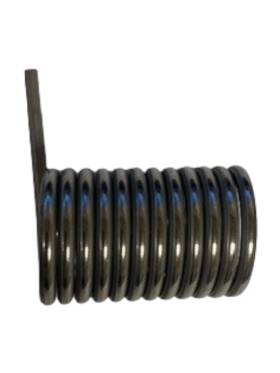
( Brand: Boeing ), ( Manufacturer Part Number: PSPG611301A0006 ), ( Part Type: Spring )
Review BOEING Genuine Spring Torsion New Oem
The **Boeing PSPG611301A0006 Spring Torsion** is a high-performance, precision-engineered torsion spring designed for demanding aerospace and industrial applications where reliability, durability, and consistent performance are critical. This component is part of Boeing s proprietary line of mechanical fasteners and actuators, meticulously crafted to meet stringent aerospace standards, including those set by the Federal Aviation Administration (FAA) and the International Air Transport Association (IATA). Engineered from high-grade, heat-treated alloy steel, the torsion spring is optimized for resilience against fatigue, corrosion, and extreme environmental conditions, ensuring long-term functionality even in high-stress, high-vibration environments such as aircraft control systems, landing gear mechanisms, or other critical flight-critical assemblies.
The **PSPG611301A0006** features a tightly wound, helical design with a controlled torque characteristic, providing predictable and consistent rotational force across its operational range. Its precise dimensional tolerances achieved through advanced CNC machining and laser-guided quality control guarantee seamless integration into complex assemblies without clearance issues or binding. The spring s surface finish is polished to minimize friction and wear, while its internal geometry is optimized to distribute stress evenly, reducing the risk of premature failure. Additionally, the component is treated with a protective coating, such as cadmium plating or a corrosion-resistant polymer, to enhance resistance to moisture, salt spray, and thermal fluctuations, making it suitable for both military and commercial aviation applications.
Beyond its mechanical robustness, the **Boeing PSPG611301A0006** is engineered for ease of installation and maintenance. Its standardized mounting features, such as precision-ground holes or flanges, allow for quick and secure attachment to mating components, while its modular design enables easy replacement without requiring extensive disassembly. This spring is particularly well-suited for applications where space constraints are a factor, as its compact yet robust construction maximizes torque output within a minimal footprint. Whether deployed in flight control surfaces, cargo door mechanisms, or auxiliary systems, the torsion spring delivers the precision and dependability required to ensure operational integrity under the most demanding conditions.
For engineers and technicians working in aerospace or high-reliability industries, the **Boeing PSPG611301A0006** represents a benchmark in mechanical performance, combining Boeing s legacy of innovation with cutting-edge materials science. Its inclusion in a system is not merely a functional necessity but a strategic investment in safety, efficiency, and longevity qualities that align with the highest standards of modern aviation engineering.
**Pros and Cons of buying a Boeing PSPG611301A0006 Spring Torsion**
The **Boeing PSPG611301A0006** is a spring torsion component, commonly used in aircraft landing gear systems, particularly for the Boeing 737 series. Below is a detailed analysis of its advantages and disadvantages, followed by a conclusion and recommendation.
---
### **Pros**
1. **High Quality and Durability**
The Boeing PSPG611301A0006 is manufactured to strict aerospace standards, ensuring reliability and longevity. Boeing s reputation for precision engineering means the part is built to withstand extreme stress, vibration, and environmental conditions, which is critical for aviation applications.
2. **OEM Compatibility**
As an original equipment manufacturer (OEM) part, it is designed to fit seamlessly into Boeing aircraft systems without modification. This reduces the risk of compatibility issues that can arise with aftermarket or non-OEM parts.
3. **Reliability in Critical Applications**
Landing gear systems are safety-critical components, and a high-quality torsion spring like this one minimizes the risk of failure. The part is engineered to maintain consistent performance over thousands of cycles, which is essential for commercial aircraft that operate frequently.
4. **Warranty and Support**
Purchasing directly from Boeing or an authorized distributor often comes with warranty coverage and technical support. This can be valuable for operators who need to ensure the part meets safety regulations and maintain compliance with aviation authorities like the FAA or EASA.
5. **Consistency and Traceability**
OEM parts come with full documentation, including material certifications, manufacturing records, and traceability. This is important for maintenance logs, inspections, and compliance with regulatory requirements.
6. **Long-Term Cost Efficiency**
While the upfront cost may be higher than some aftermarket alternatives, the reduced risk of premature failure or unexpected repairs can make it cost-effective over the part s lifespan. Downtime in aviation is expensive, and a reliable part helps avoid costly disruptions.
7. **Standardization**
The part is standardized for specific Boeing models, ensuring that it meets the exact specifications required for the aircraft s landing gear system. This standardization reduces the need for customization or workarounds.
---
### **Cons**
1. **High Cost**
The primary drawback of purchasing an OEM part like the Boeing PSPG611301A0006 is its significant cost. OEM components are priced higher than aftermarket alternatives due to the premium placed on quality, certification, and support. This can be a barrier for operators with tight budgets or those looking to replace parts on older aircraft.
2. **Long Lead Times**
Boeing and its distributors often have limited stock of specific parts, leading to longer lead times for delivery. This can delay maintenance or repairs, particularly in urgent situations where downtime is costly.
3. **Limited Availability for Older Aircraft**
While this part is likely designed for newer or mid-life Boeing aircraft, older models may have discontinued parts or variations that are no longer produced. This can complicate sourcing for operators with legacy fleets.
4. **Potential for Overkill**
For some applications, the robustness of an OEM part may exceed the actual needs of the aircraft or its operating conditions. In cases where the part is used in less demanding environments, the extra durability may not be necessary, making it an unnecessary expense.
5. **Dependency on Boeing s Supply Chain**
Purchasing directly from Boeing or its authorized channels means reliance on the manufacturer s supply chain, which can be subject to delays, logistical issues, or even supply chain disruptions (e.g., due to global events or internal production challenges).
6. **Resale or Trade-In Value**
OEM parts may not hold significant resale value, especially if they are no longer in use. Unlike some aircraft components, torsion springs are typically consumed during use and are not easily repurposed or resold.
7. **Potential for Counterfeit Parts**
While rare, there is a risk of encountering counterfeit OEM parts in the aftermarket. These can pose safety risks and may not meet the required standards. Operators must source parts from reputable distributors to avoid this issue.
---
### **Conclusion**
The **Boeing PSPG611301A0006 spring torsion** is a high-quality, reliable component that is ideal for critical applications in aviation, particularly where safety, compliance, and longevity are paramount. Its advantages in terms of durability, compatibility, and support make it a strong choice for operators who prioritize performance and regulatory adherence. However, the high cost, long lead times, and potential overkill for less demanding applications can be significant drawbacks, particularly for operators with budget constraints or non-critical uses.
For most commercial aircraft operators, especially those maintaining Boeing 737 fleets, the benefits of an OEM part outweigh the drawbacks. The reduced risk of failure, seamless integration, and long-term reliability justify the investment, particularly in safety-critical systems like landing gear.
---
### **Recommendation**
**Purchase the Boeing PSPG611301A0006 if:**- You are operating a Boeing aircraft (e.g., 737) and require an OEM part for compliance or safety reasons.
- You prioritize reliability, traceability, and warranty support over cost savings.
- The part is essential for maintaining airworthiness or meeting regulatory requirements.
- You have the budget to accommodate the higher upfront cost and can tolerate potential lead times.
**Consider alternatives if:**- You are working with a limited budget and can source a high-quality aftermarket part that meets the same specifications (e.g., from reputable aerospace suppliers like Stanley, Accuform, or other FAA/EASA-approved manufacturers).
- The part is for a non-critical application where the full OEM specification is unnecessary.
- You can accept the risk of slightly longer lead times in exchange for cost savings, and you have a reliable source for aftermarket parts with proper certifications.
**Best Practices for Purchase:**- Source the part from **authorized Boeing distributors** or **FAA/EASA-approved suppliers** to ensure authenticity and compliance.
- Verify the part number and aircraft model compatibility to avoid mismatches.
- Consider **bulk purchasing** or **long-term contracts** with Boeing if you anticipate frequent replacements, as this may help manage costs and lead times.
- Maintain **detailed records** of the part s installation, including serial numbers and maintenance logs, to support compliance and future inspections.
In summary, for most aviation professionals, the **Boeing PSPG611301A0006** is the safest and most reliable choice when replacing a torsion spring in a Boeing aircraft. However, a cost-benefit analysis is essential to determine whether the investment aligns with your operational needs.
Details:
Buyer should verify this is the exact part needed before purchasing.
part #: pspg611301a0006 price
- $41.56
specifications snowmobileshocksoi:
- brand: Boeing
- mpn: Pspg611301a0006
- part type: Spring
offer snowmobileshocksoi:
- availability: In Stock
- started: May 19, 2026
- options: Ship-to-home
- best offers: True
- sold: 0
seller snowmobileshocksoi:
- rating: 99.7%
- city: Beaver Dam, WI
- # reviews: 24015
general snowmobileshocksoi:
- condition: New
- Parts Accessories > Snowmobile Parts > Shocks Suspension
payments snowmobileshocksoi:
- other
- wallet: Apple-pay
- credit card: Discover
returns snowmobileshocksoi:
- paid by: Seller
- policy: Returns Accepted
- time: 30 Days
shipping snowmobileshocksoi:
- service: Standard
- transit: 2-4 Days
- class: Standard
- type: Fixed
- cost: $14.95
Boeing PSPG611301A0006 Is Similar To:
- Boeing 605619-1 Genuine Clip Spring New Oem (68.8% similar) Buyer should verify this is the exact part needed before purchasing...(May 24th, 2025)
- Boeing 2161-0435-1 Genuine Spring Torsion New Oem (80.8% similar) Buyer should verify this is the exact part needed before purchasing...(May 31st, 2025)
- Boeing 3d2031-4 Genuine Spring Torsion New Oem (81.2% similar) Buyer should verify this is the exact part needed before purchasing...(May 31st, 2025)
- Boeing 403z1345-8 Genuine Spring Clip Retainer Pas New Oem (63.1% similar) Buyer should verify this is the exact part needed before purchasing...(May 31st, 2025)
- Boeing 800454 Genuine Kit Seal Cross Shaft New Oem (58.3% similar) Buyer should verify this is the exact part needed before purchasing...(May 31st, 2025)
- Boeing 3d2031-3 Genuine Spring Torsion New Oem (81.2% similar) Buyer should verify this is the exact part needed before purchasing...(May 31st, 2025)