SP1 MN-1743 Upper Radius End Sp Suspension Tie Rod MN/1743
fits model: Xlt. make: Polaris. year: 1994–1999.
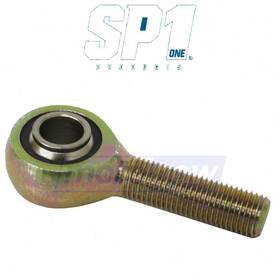
( Manufacturer Part Number: MN/1743 ), ( Compatible Year: 1999 1998 1997 1996 1995 1994 ), ( Compatible Model: Xlt Sp ), ( Bundle Description: 1 Pc Genuine Sp1 Radius Rod Ends ), ( Type: Radius Rod Ends ), ( Core Charge: Free No Core Charge ), ( Fitment Type: Direct Replacement ), ( Position: Upper )
Review SP1 Mn/1743 Upper Radius Rod End Polaris Sp Suspension Tie Rods Lm fits XLT 1994–1999
The **SP1 MN/1743 Upper Radius Rod End** is a high-performance, precision-engineered suspension component designed specifically for the **1994 1999 Polaris XLT SP**, ensuring optimal handling, durability, and ride quality. This rod end serves as a critical link in the vehicle s steering and suspension system, connecting the upper radius arm to the steering knuckle while absorbing shocks, vibrations, and lateral forces during aggressive off-road use. Crafted from **high-grade, heat-treated steel**, this rod end is built to withstand extreme stress, preventing premature wear, elongation, or failure common issues in demanding off-road applications. Its **ball-and-socket design** allows for smooth articulation, reducing binding and improving steering responsiveness, whether navigating rough trails, tight turns, or aggressive wheel movement. The **sealed bearing assembly** ensures long-lasting lubrication, minimizing friction and corrosion, even in harsh environments where dust, mud, and moisture are inevitable. This rod end is a direct replacement for the OEM part, maintaining the original fitment while offering superior strength and reliability, making it an essential upgrade for enthusiasts seeking to enhance their XLT SP s suspension performance and longevity. Whether used in stock configurations or as part of a full suspension rebuild, this rod end delivers the robustness needed to tackle the toughest terrain with confidence.
Buying a **SP1 MN/1743 Upper Radius Rod End** for a **1994 1999 Polaris XLT SP suspension tie rod** can be a practical solution for repairing worn or damaged components, but there are key advantages and disadvantages to consider before making a purchase.
### **Pros of Buying This Part**
1. **Direct Fitment** The part is designed specifically for your model year and suspension setup, ensuring compatibility without modifications. The **SP1 MN/1743** is a common OEM-style rod end, meaning it should align properly with the existing mounting points on your vehicle.
2. **Improved Safety** Worn or loose tie rod ends can compromise steering stability, leading to erratic handling or sudden loss of control. Replacing a faulty rod end restores proper alignment and reduces the risk of steering-related accidents.
3. **Cost-Effective Repair** Compared to full suspension overhauls or replacing the entire tie rod assembly, a single rod end replacement is relatively inexpensive. Prices typically range from **$20 $50 per unit**, depending on the source (OEM, aftermarket, or used).
4. **Easy Installation** Rod end replacements are straightforward DIY jobs for those with basic mechanical skills. Most require only a socket wrench, C-clamp, and penetrating oil. No specialized tools are needed unless the ball joint is seized.
5. **Extended Lifespan** Replacing a worn rod end prevents further damage to adjacent components, such as the steering rack or control arm bushings. This can delay more expensive repairs down the line.
6. **Aftermarket Quality Options** While OEM parts are reliable, aftermarket rod ends (like those from **Moog, Febi Bilstein, or local manufacturers**) often offer similar performance at a lower cost. Some even include sealed bearings for added durability.
7. **Availability** This part is widely available through **Polaris dealers, online marketplaces (eBay, RockAuto, Amazon), and specialty suspension shops**. Spare parts for older Polaris models are still in circulation, though stock may vary.
---
### **Cons of Buying This Part**
1. **Potential Counterfeit or Low-Quality Parts** Some aftermarket rod ends may be made from subpar materials or lack proper heat treatment, leading to premature wear or failure. Buying from reputable sellers (e.g., **RockAuto, eBay verified, or local shops**) helps mitigate this risk.
2. **Worn Adjacent Components** If the rod end is failing due to **excessive play in the steering rack, worn bushings, or misaligned control arms**, replacing just the rod end may not fully resolve the issue. A thorough inspection of the entire suspension is recommended.
3. **Ball Joint Wear** The rod end connects to a **ball joint** at the control arm. If the ball joint is seized or worn, removing the rod end can be difficult. In some cases, the entire **tie rod assembly** (rod end ball joint) may need replacement.
4. **Alignment Issues** If the rod end is replaced without updating the **wheel alignment**, the vehicle may pull to one side or exhibit uneven tire wear. An alignment check ( $50 $100) is advisable after installation.
5. **Limited Longevity in Harsh Conditions** Rod ends in **off-road or high-stress applications** (e.g., frequent deep mud, rocks, or aggressive riding) may wear out faster than expected. In such cases, **sealed or reinforced rod ends** (if available) may be preferable.
6. **Installation Challenges** If the rod end is **rusted or corroded** in place, removal can be difficult without the right tools (e.g., **thread chaser, penetrant spray, or a press**). Improper removal may damage the steering rack or control arm threads.
7. **Mixed Reviews on Aftermarket Brands** While most aftermarket rod ends work fine, some users report **looseness, premature wear, or failure** with cheaper brands. OEM or high-quality aftermarket parts (e.g., **Moog, Febi, or local Polaris parts suppliers**) are safer bets.
---
### **Conclusion & Recommendation**
Replacing a **worn or damaged upper radius rod end** on your **1994 1999 Polaris XLT SP** is a **practical and cost-effective repair** that improves safety and handling. The **SP1 MN/1743** part is a solid choice, especially if sourced from a **trusted supplier** (preferably OEM or a well-reviewed aftermarket brand).
#### **Key Steps Before Purchase:**1. **Verify the Part Number** Ensure the **SP1 MN/1743** matches your exact application. Some Polaris models have slight variations in rod end designs.
2. **Check for Play** Before buying, confirm the rod end is **loose or seized** by wiggling it while the wheel is off the ground. If it moves excessively, replacement is necessary.
3. **Inspect Adjacent Components** While replacing the rod end, check the **ball joint, control arm bushings, and steering rack** for wear. Addressing these issues simultaneously prevents future problems.
4. **Choose Quality Over Price** Avoid ultra-cheap rod ends from unknown sellers. Prioritize **OEM, Moog, or Febi Bilstein** for reliability.
5. **Consider a Full Tie Rod Assembly** If the ball joint is also worn, replacing the **entire tie rod assembly** (rod end ball joint) may be more cost-effective in the long run ( $80 $150).
#### **Final Recommendation:**- **Buy the SP1 MN/1743 rod end** from a **reputable source** (RockAuto, Polaris dealer, or a trusted online seller).
- **Replace it as soon as possible** if it s loose, as steering safety is compromised.
- **Update the wheel alignment** after installation to prevent uneven tire wear.
- **Monitor for recurrence** if the rod end fails again quickly, investigate **steering rack wear or control arm issues**.
This repair is a **simple, high-impact fix** that extends the life of your XLT SP s suspension while maintaining safe handling. For best results, pair it with a **basic suspension inspection** to catch any underlying problems.
Details:
SP1 Upper Radius Rod End for 1994 - 1999 Polaris XLT SP - Suspension Tie Rods lm: Status: In Stock.
part #: mn1743 prices
- $25.54-$35.53
specifications snowmobileshocksoi:
- for models: Xlt
- for makes: Polaris
- for years: 1994-1999
- mpn: Mn/1743
- compatible year: 1999 1998 1997 1996 1995 1994
- compatible model: Xlt Sp
- bundle description: 1 Pc Genuine Sp1 Radius Rod Ends
- type: Radius Rod Ends
- core charge: Free No Core Charge
- fitment type: Direct Replacement
- position: Upper
seller snowmobileshocksoi:
- rating: 98.9%
- city: Multiple warehouses
- # reviews: 19361
offer snowmobileshocksoi:
- sold: 0
- options: Ship-to-home
- quantity: 1
- started: March 22, 2026
- availability: In Stock
payments snowmobileshocksoi:
- credit card: Visa
- wallet: Apple-pay
- other
general snowmobileshocksoi:
- condition: New
- Parts Accessories > Snowmobile Parts > Shocks Suspension
shipping snowmobileshocksoi:
- transit: 3-6 Days
- type: Fixed
- class: Standard
- service: Standard
- cost: $0.00
returns snowmobileshocksoi:
- paid by: Seller
- policy: Returns Accepted
- time: 30 Days
Sp1 MN-1743 Is Similar To:
- Sp1 Gas Ski Shock With Spring For Polaris Su-08251s (36.5% similar) SP1 shocks are designed to work with oem bushings, springs and collars. SP1 heated brake lever compatible with Yamaha SM-08585. K l carburetor boot/holder 11-4221. New condition...(May 30th, 2022)
- Sp1 Sm-08684r Chrome Moly Upper A-arm Black (24.8% similar) Photos are for reference only. Actual product may differ from the item shown in photograph. Compatible with polaris 800 switch back pro-x 2015 - 2017 . Compatible with polaris 800 switch back pro-s le 2017 . New condition...(June 24th, 2022)
- Sp1 Gas Suspension Shock Rear For Arctic Cat For Yamaha Su-04311 (29.3% similar) SP1 shocks are designed to work with oem bushings, springs and collars. New condition...(July 1st, 2022)
- Sp1 Sway Bar Disconnect For Polaris Sm-08452 (40% similar) Use your sway bar on the trail for increased control disconnect it when you get up on the mountain quick and significant suspension adjustment allows tighter bonding and easier sidling. New condition...(July 4th, 2022)
- Sp1 Lower Left Hand A-arm For Ski-doo Sm-08699l (28.6% similar) Lycra 5-PIECE replica kit for Yamaha black 1CYC-9412-12. Lycra 5-PIECE replica kit for KTM original 20 1CYC-9426-00. Lycra 5-PIECE replica kit for Kawasaki white 1CYC-9419-42. New condition...(July 31st, 2022)
- Sp1 Lower Left Hand A-arm For Polaris Sm-08686l (37.6% similar) New condition...(August 2nd, 2022)
- Sp1 Lower Right Hand A-arm For Ski-doo Sm-08652r (31.3% similar) Lower a-arms. Bouillon cha ne blocs adjuster pour Yamaha nor CHAD-YZF4. Bike master spark plug protector FHM034. Bike master 19MM fork compression valve removal tool 19MM 14-K387. New condition...(August 3rd, 2022)
- Sp1 Sm-08671r Chrome Moly Upper A-arms Black (27.7% similar) Photos are for reference only. Actual product may differ from the item shown in photograph. Compatible with polaris 850 Mk khans 155 3IN. Compatible with polaris 850 Mk khans 155 2020 -2021. Compatible with polaris 850 pro-Mk Axis 165 2.75IN. New condition...(August 3rd, 2022)
- Sp1 Bushing Bolt Kit For Polaris Sm-08618 (34.6% similar) Bushing/bolt kit. Hard drive for touring remote res shocks 13INCH standard R0800182-1. Moose racing stainless steel brake line for wry 250/450 f 1741-0264. New condition...(August 5th, 2022)
- Sp1 Upper Lh A-arm For Ski-doo Sm-08690l (31.7% similar) Belt drives ltd. Spacer insert - 1/2INCH IN-500. Rental rear sprocket 50-TOOTH orange 441U-428-50GPOR. New condition...(August 11th, 2022)
- Sp1 Tie Rod End For Arctic Cat Sm-08409 (40% similar) Tie rod end. Eves ctr vest black all sizes. Factory effed Kawasaki bold snap back hat charcoal/black. Fly racing marker boot black all sizes. Fly racing Sn pro Sb pants black all sizes. New condition...(August 12th, 2022)